
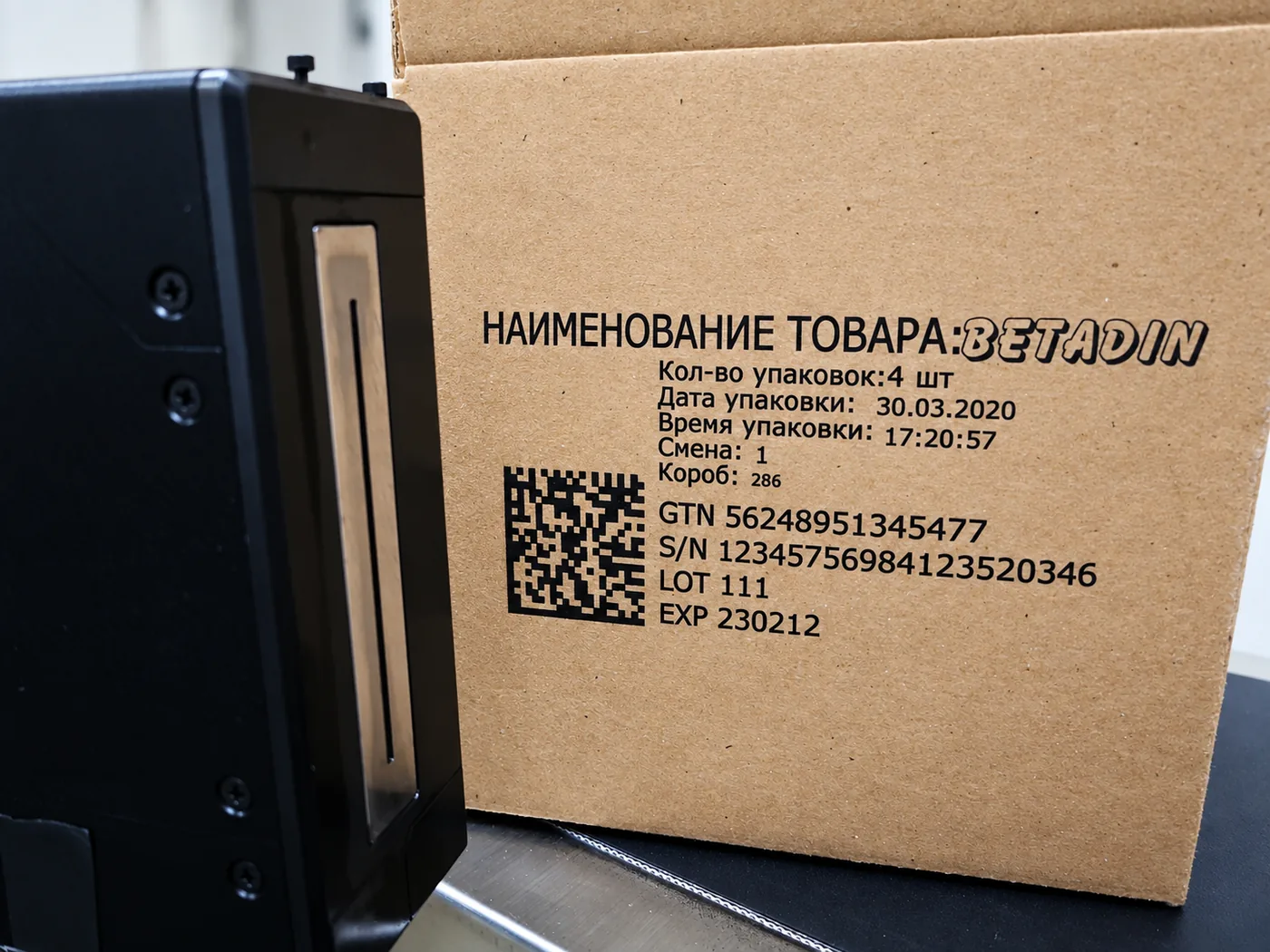
Start with the code, not the printer
Write down the largest message the case must carry before comparing equipment. A short date or lot code has very different space requirements from a product name, logo, shipping mark or tall case identifier. Also record the number of text lines, barcode size, print location and whether every case uses the same layout. This keeps the selection focused on the real production job instead of a maximum specification you may never use.
If the case only needs a compact date, lot number or small barcode, evaluate a thermal inkjet printer such as the RNJet H1, which prints up to 12.7 mm high. For larger product IDs, logos and shipping marks, compare a large-character piezo case coder. The industrial inkjet printer guide explains where thermal inkjet and piezo systems fit across production lines.
Choose print height for the actual case layout
Use the Box printer guide to compare small date and lot codes with large-character case marks before sizing the message for your line.
The RNJet E1-72+ is a single-head, high-resolution piezo printer with print height up to 72 mm and a 490 mL motorized bulk ink system. It suits larger one-color case marks while reducing small-cartridge changeovers on long runs. The dual-head RNJet E1-140+ prints up to 144 mm high, uses the same 490 mL motorized bulk system and supports optional bi-color printing for layouts that need more vertical space.
Do not choose a 144 mm system simply because it is the largest option. Build the production message at its intended size and leave room for the natural variation in box position. A 72 mm layout can be the better fit when it covers the message and leaves a practical placement window on the side panel.
Test the actual corrugated surface
Uncoated corrugated board usually absorbs ink, while coated, laminated, heavily preprinted or shrink-wrapped cases can behave differently. Color and surface finish can also change visible contrast. Test cases from the same supply used on the line and check drying time, rub resistance and legibility after normal handling. If the message includes a barcode, scan samples from each case finish and color under the same conditions used in production.
Run the trial on both clean and normally dusty cases when that reflects the plant. Print over the intended panel rather than a hand-selected flat area, and avoid assuming that ink performance on one cardboard grade will transfer to another. RNJet USA can use an actual case sample to help match the printer and ink to the application.
Plan the print location before installation
Measure conveyor speed at the proposed print station and note how much each case moves sideways or vertically. Use line guides where needed to keep the side panel steady. Place the message away from tape seams, flaps, crushed corners and panel joints, and confirm that the printhead can reach the target area without contacting the box.
Include starts, stops, product gaps and normal speed changes in the trial. Check the first and last cases in a run as well as cases printed at steady speed. The goal is not just a clear sample on a bench; it is repeatable placement and readable output on the production line.
Printing on two sides of a shipping case
If the lot code or barcode must be visible from either side of a pallet, mark the two required panels on a sample box. Check where each panel passes the guide rails and tape head. Run the narrowest and widest cases you pack, then read both marks on the sealed boxes from the positions used at receiving.
For a line example, watch the E1-140 print on both sides of a box at a carton taping machine. Compare the E1-140 dual-head specifications with the message dimensions and mounting space on your own line.
Compare the complete operating setup
Printer price is only one part of the decision. Compare the required print height, expected ink use, refill or cartridge changeovers, mounting space and operator changeover steps. For a repeatable ink-only estimate, enter the price of one cartridge or bottle and its measured piece yield in the industrial ink cost calculator. Use yield measured with your complete code and production setup; the message preview does not measure ink consumption. Request a material trial when that yield is not yet known.
If the project is primarily production dates, expiration dates and lot codes across several package types, use the batch coder selection guide as the broader starting point. For available printer and ink configurations, review the U.S. printer and ink catalog.
If you are comparing box labels with direct inkjet printing, tally label stock, ribbons where applicable, and applicator upkeep alongside ink use and printer maintenance. Confirm which customer and carrier label requirements still apply before changing the process.
If the Videojet 2120 is on your shortlist, compare Videojet 2120 and RNJet 72 print heights and line speeds for the exact head and carton finish you plan to use.
Case-coder trial checklist
- Actual corrugated case samples, including every coating and color in use
- Largest message at its intended print size
- Required text, logo, barcode and shipping-mark elements
- Conveyor speed, starts and stops, and case-to-case position variation
- Proposed print location, available mounting space and nearby seams or flaps
- Drying, rub-resistance and barcode scanning checks after normal handling
Case coder, box coder or carton printer: does the name matter?
Suppliers use case coder, box coder, carton printer and corrugated box inkjet printer somewhat interchangeably, and that inconsistency can make it harder to compare quotes. What actually matters for a case coding printer is the print height it covers, the ink system behind it and how it mounts at your print station — not which of those names appears in the spec sheet. When you're researching a digital corrugated printer or an inkjet printer for corrugated boxes, ask every supplier for the same three numbers: maximum print height, ink type and refill format, and rated line speed, so quotes are comparable side by side.
If your search also turns up industrial barcode printer results, note that those typically describe label-based systems rather than direct case coding. Direct inkjet marking and label-based barcode printing solve a similar problem in different ways; compare ink and maintenance costs against label stock, ribbon and applicator upkeep before deciding which fits your line.
Frequently asked questions
What print height do I need for a shipping case?
It depends entirely on your required message. A date and lot code can often fit in 12–25 mm, while a full shipping mark, logo or large product identifier may need 72–144 mm. Write down your largest message before comparing printers.
Can the same case coder print on different box colors and finishes?
Often yes, but contrast and adhesion can change with the box color, coating and whether it's a kraft, white or heavily preprinted case. Test each finish you run in production rather than assuming one result applies to all.
Is a thermal inkjet or piezo printer better for cardboard?
Thermal inkjet suits smaller codes at higher resolution, such as date and lot codes, while large-character piezo systems cover shipping marks, logos and bigger product identifiers. Many lines use both: a thermal inkjet printer for the date code and a piezo case coder for the larger mark.
Request a corrugated box printer quote
Include your box material and finish, the largest code or artwork you plan to print, your conveyor speed, and which side of the box needs marking. RNJet USA can compare thermal inkjet and piezo case coders for your line and arrange a print trial using your own corrugated board.