
By Dylan. Originally published by RN MARK on .
For a U.S. grading line, use the eggshell print test checklist to check code placement across grader lanes and egg sizes. See the RNJet EP-6H+ U.S. ordering page for the current configuration and availability.
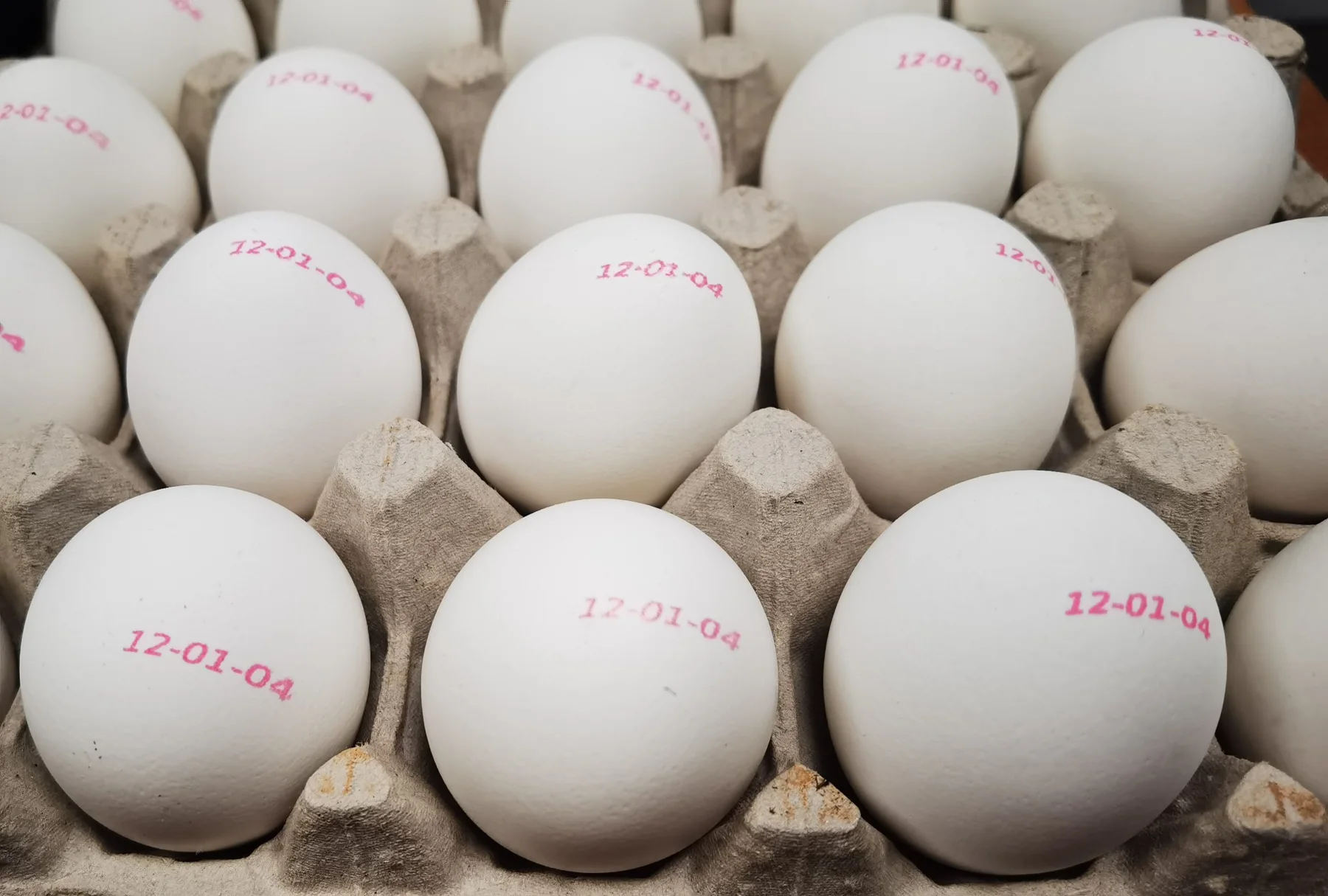
In the modern poultry and egg packaging industry, traceability, branding, and food safety compliance are no longer optional—they are essential. One of the most critical steps in this chain is printing codes directly onto egg shells, including batch numbers, expiration dates, farm identifiers, and sometimes even branding elements.
But egg shells are one of the most challenging surfaces to print on: they are fragile, curved, porous, and often dusty or moist. Choosing the right coding technology is therefore not just a technical decision – it directly affects product quality, regulatory compliance, and operational efficiency.
This article explores how to choose the best printing code technology for egg shells, what factors matter most, and which industrial printing systems deliver the best long-term performance.
Consumers also want to know where their food came from, who is providing it and when it was produced.
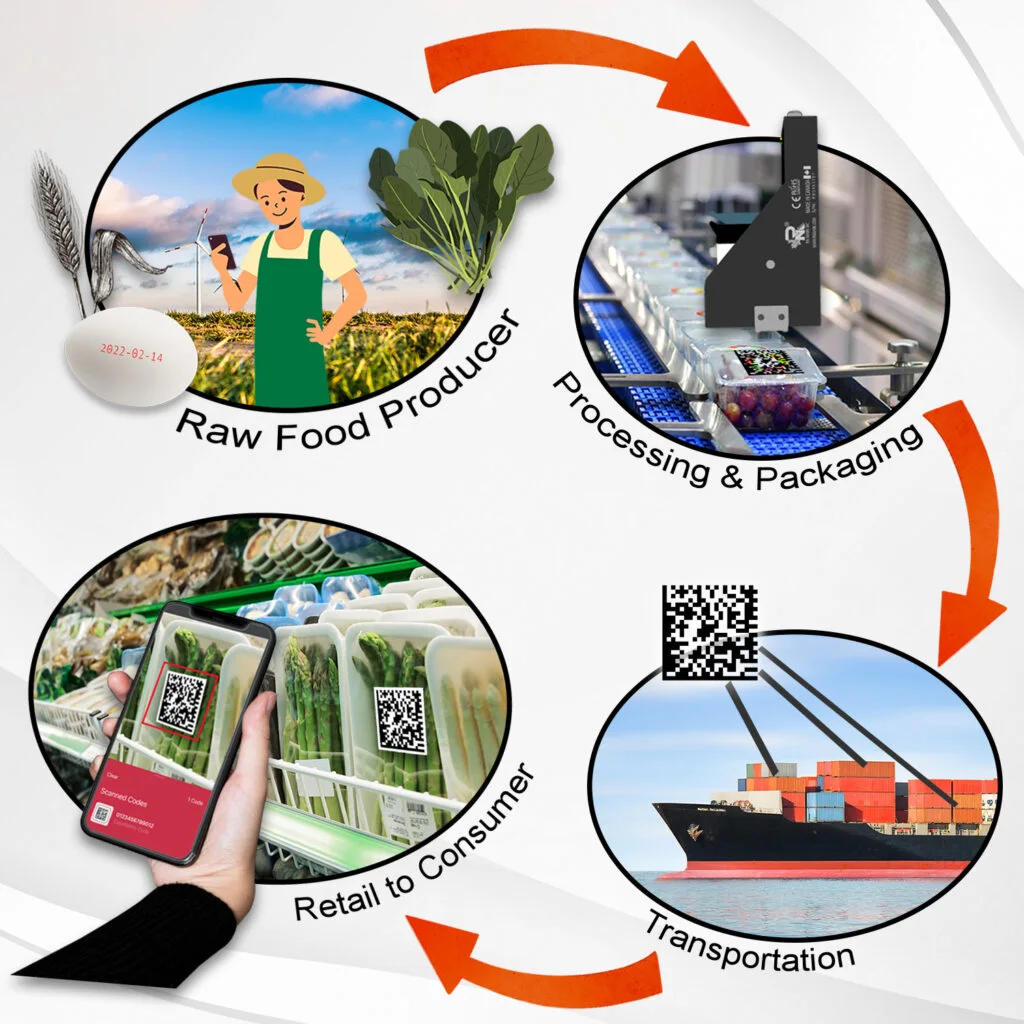
Printing & marking legible and accurate information on products is an important requirement for any food manufacturer, as traceability becomes more common (and more often required) in the industry. When it comes to food safety, especially with eggs, clear codes for traceability and easy to read use-by date markings are critically important.
When coding on eggs, this task is particularly difficult due to the delicate, uneven nature of the shells. Inkjet printers are ideal for this requirement, as they spray food-safe ink from a small distance, without even touching the surface of the egg. This prevents some damage from unevenly sized or oriented eggs, but with rigid print heads, there still comes a loss of product due to shell breakage.
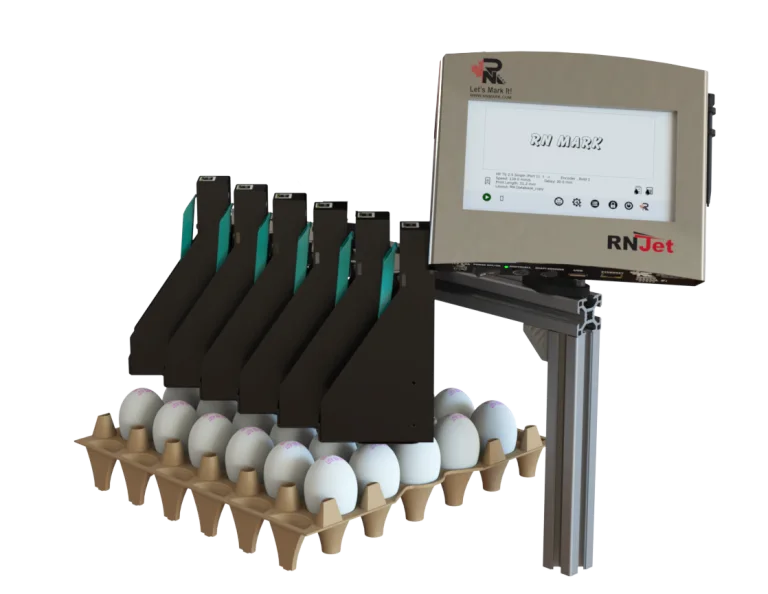
When evaluating the RNJet EP-6H+ egg printer, test code placement on the actual egg sizes and orientations. Check shell handling and print readability on each grader lane. Confirm the ink formulation against the USDA AMS list of inks for shell-egg marking.
RNJet EP-6H+ – Egg Shell Printer Machine
Why Egg Shell Coding Matters
1. Food Safety and Traceability
- Production date
- Farm or facility code
- Expiry date
- Batch or lot number
If a food safety issue arises, these codes allow rapid identification and recall of affected products.
2. Consumer Trust
Modern consumers prefer transparency. Clear printed codes on eggs communicate freshness and origin, building confidence in the brand.
3. Supply Chain Control
Retailers and distributors rely on egg codes to manage inventory, reduce waste, and ensure proper rotation of stock.
Challenges of Printing on Egg Shells
1. Fragile Surface
Egg shells can crack under excessive pressure or incorrect handling. Any printing system must be non-contact or extremely gentle.
2. Curved Geometry
The round shape of eggs makes consistent print alignment difficult.
3. Porosity
Egg shells absorb ink differently depending on humidity and shell composition, which can affect clarity.
4. High-Speed Production
Egg grading and packaging lines often process tens of thousands of eggs per hour, requiring extremely fast printing systems.
5. Hygiene Requirements
Any printing process must comply with food safety standards, using food-safe inks and clean application methods.
Watch the original videoFor line setup and sample testing, see the RNJet USA egg coding guide.