
By Dylan. Originally published by RN MARK on .
The modern egg industry is built on speed, traceability, and consumer confidence. Whether you’re producing thousands or millions of eggs every week, every egg that leaves your facility represents your brand’s reputation.
On this page
- 1. Food Safety and Regulatory Compliance Should Always Come First
- 2. Speed Matters More Than You Think
- 3. Not Every Egg Is the Same
- 4. Easy Integration Saves Time and Money
- 5. Low Maintenance Means Higher Profitability
- Why Traceability Is Becoming More Important
- Why More Producers Are Choosing Thermal Inkjet Technology
- Frequently Asked Questions
- Get in touch with an expert
- Why should you choose RNJet?
Egg printing is no longer just about adding a date or farm code. Today’s producers need printing systems that deliver accurate identification, food safe marking, high production speeds, and dependable performance without slowing down operations.
Choosing the wrong egg printer can lead to production downtime, unreadable codes, unnecessary maintenance, and increased operating costs. Choosing the right system helps improve traceability, reduce waste, and maximize productivity.
Here are the five things every egg producer should know before investing in an egg printing solution.
1. Food Safety and Regulatory Compliance Should Always Come First
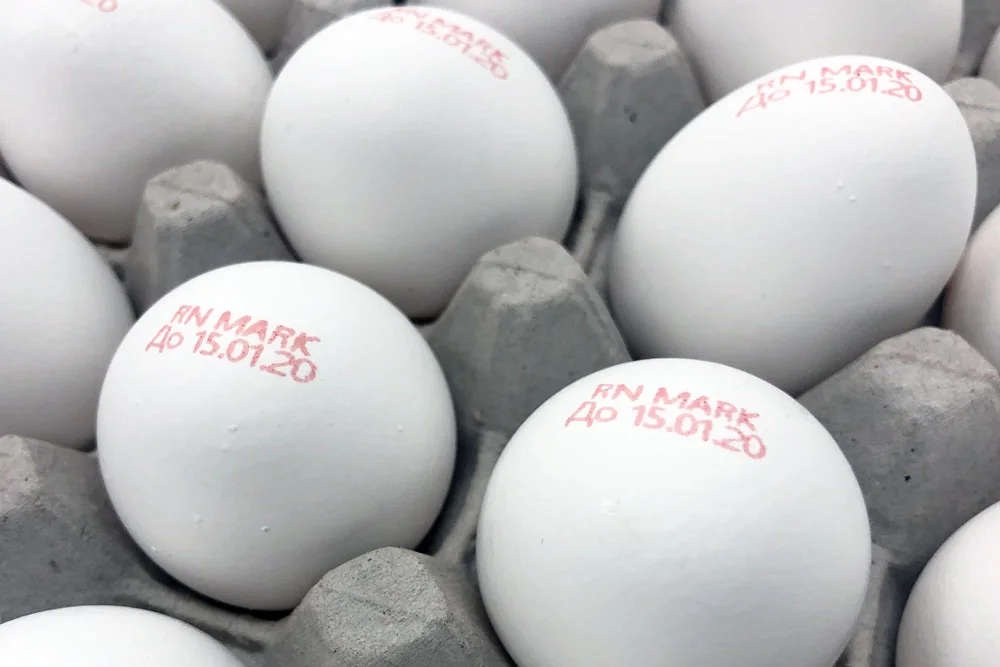
Consumers expect complete transparency about the food they purchase, and regulatory agencies require accurate product identification throughout the supply chain.
Depending on your market, eggs may need to display information such as:
- Packing date
- Expiry or best before date
- Farm identification
- Batch or lot number
- Traceability codes
- Country or region specific information
While regulations vary by country, one requirement remains consistent: any ink used directly on eggshells must be suitable for food applications.
Check the formulation named on the supplier’s ink documentation against the USDA AMS list of inks for shell-egg marking. Confirm the cartridge part number before printing on shells.
2. Speed Matters More Than You Think
High volume egg production leaves little room for bottlenecks.
Every minute of downtime can impact productivity, increase labor costs, and reduce overall output.
Many traditional systems struggle to maintain print quality as production speeds increase.
A modern egg printer should consistently produce sharp, readable codes without sacrificing throughput.
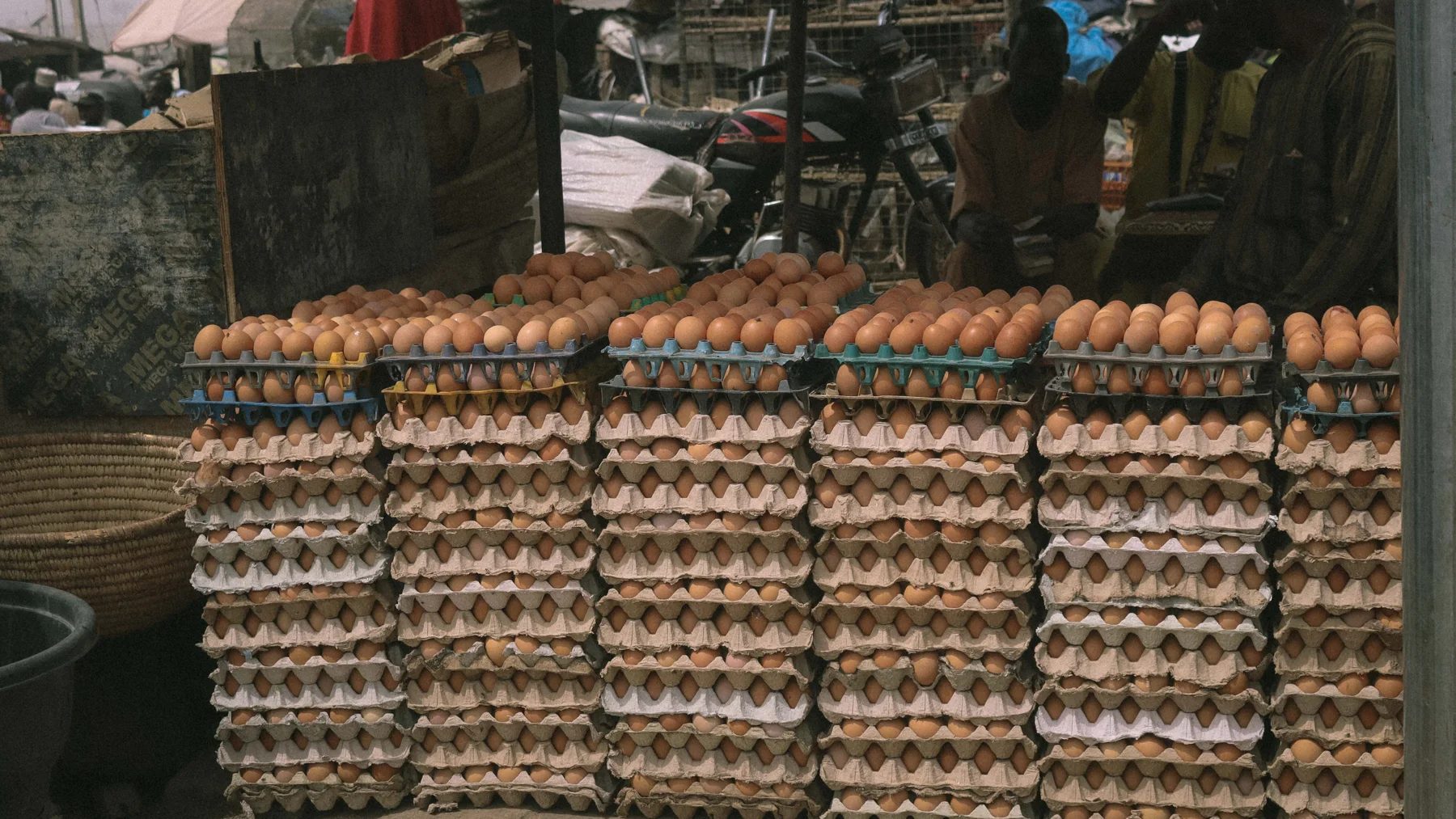
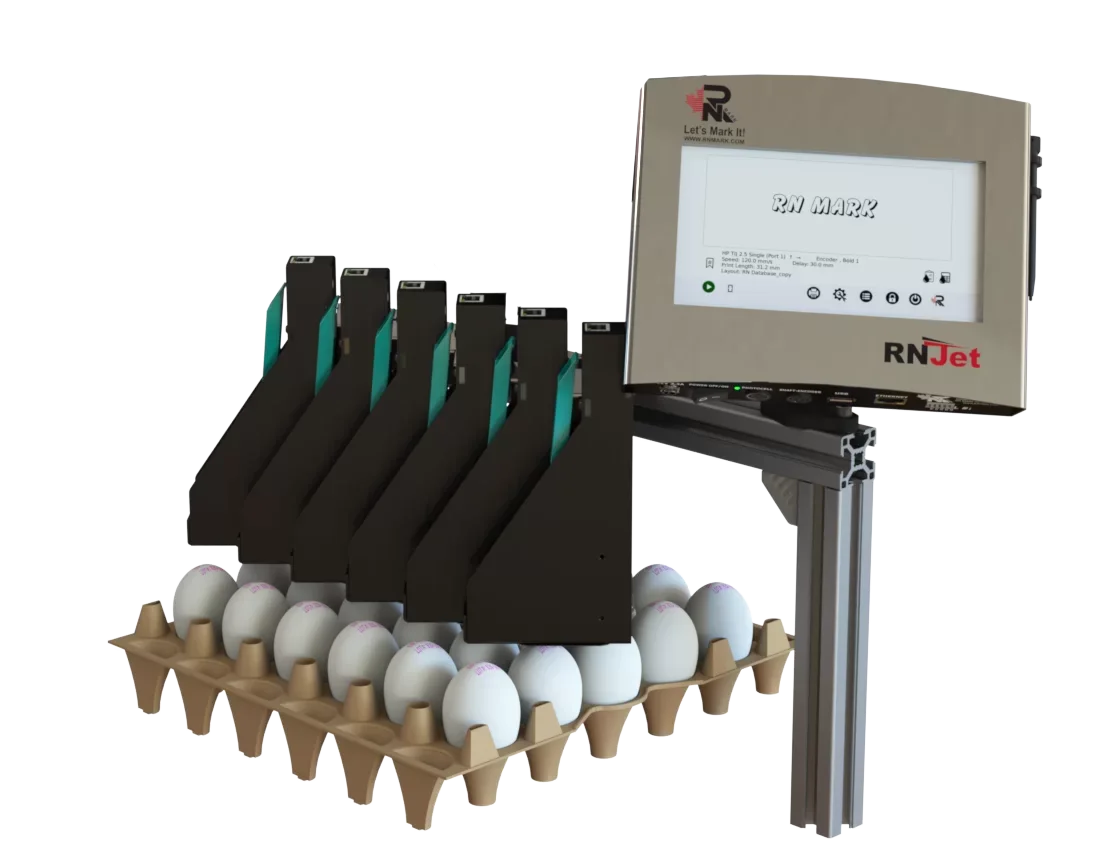
The RNJet EP 6H+ was designed specifically for high volume egg production and supports:
- Up to 130,000 eggs per hour
- Up to 30 eggs every second
- Up to 6 synchronized print heads
- High resolution printing up to 300 dpi
This combination allows producers to maintain production speed while ensuring every egg receives a clean, legible mark.
For facilities processing hundreds of thousands of eggs daily, this level of performance can significantly improve operational efficiency.
3. Not Every Egg Is the Same
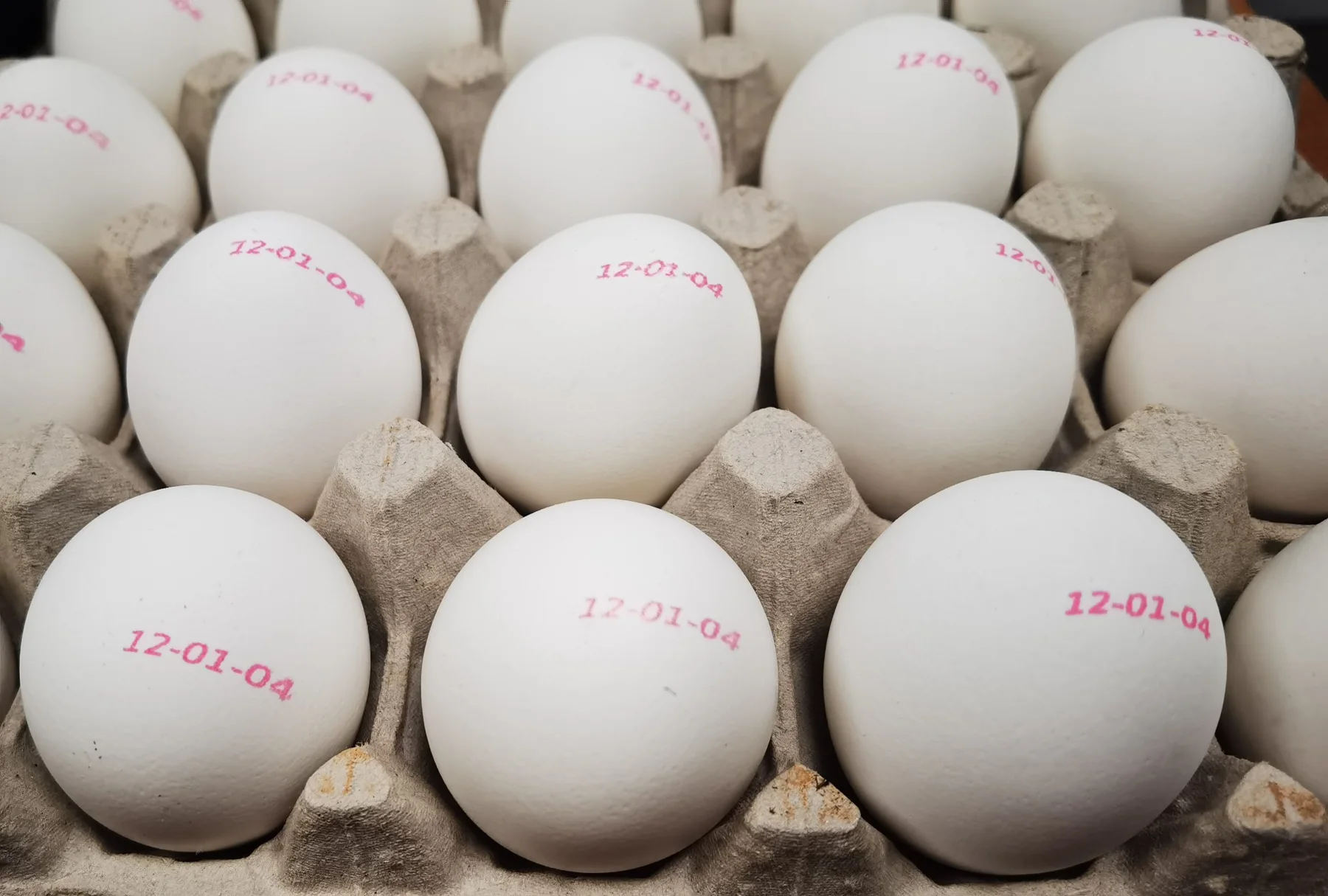
One of the biggest challenges in egg printing is the natural variation in egg size, shape, and orientation.
A printer that works well on perfectly aligned eggs may struggle when eggs vary slightly throughout production.
Poor print positioning often leads to:
- Blurred codes
- Missing characters
- Smudged printing
- Increased shell damage
- Product waste
RNJet addresses this challenge with specially designed print head compensators that gently glide over each egg.
Instead of relying on perfect positioning, the compensators adjust to natural egg variations while minimizing shell breakage and maintaining consistent print quality throughout production. This results in higher production yields and fewer rejected products.
4. Easy Integration Saves Time and Money
Adding new equipment should improve production, not complicate it.
The best egg printers integrate seamlessly into existing grading and packing lines with minimal disruption.
An ideal solution should support:
- Automatic date coding
- Julian dates
- Batch numbers
- Serial numbers
- Logos
- QR Codes
- GS1 Data Matrix
- Database driven variable information
 Get a Quote
The RNJet EP 6H+ comes with RNSoft, a Windows based software package that allows operators to create and manage dynamic print messages with ease. Use the printer’s maintenance instructions and confirm the specified ink for the egg line.
5. Low Maintenance Means Higher Profitability
When evaluating an egg printer, purchase price tells only part of the story.
Long term operating costs often have a much greater impact on profitability.
Frequent maintenance can result in:
- Lost production time
- Higher labor costs
- Increased spare part expenses
- Missed shipping schedules
The RNJet EP 6H+ was designed with reliability in mind.
Key advantages include:
- Compact design
- Model-specific maintenance instructions
- Easy to integrate in production line
- Ink selection based on formulation and shell contrast
- Easy cartridge replacement
The printer also stores production messages internally, allowing operators to switch between products quickly without rebuilding print layouts. For busy egg packing facilities, reducing maintenance requirements means more time producing and less time servicing equipment.
Watch the original videoWhy Traceability Is Becoming More Important
Consumers today expect greater transparency about the food they purchase. Retailers and distributors increasingly require products to include clear identification that supports traceability throughout the supply chain.
Accurate egg coding provides several important benefits:
- Faster product recalls when necessary
- Improved inventory management
- Better production tracking
- Increased consumer confidence
- Compliance with retailer requirements
An efficient egg printing solution is no longer simply a production accessory. It has become an essential part of quality assurance and brand protection.
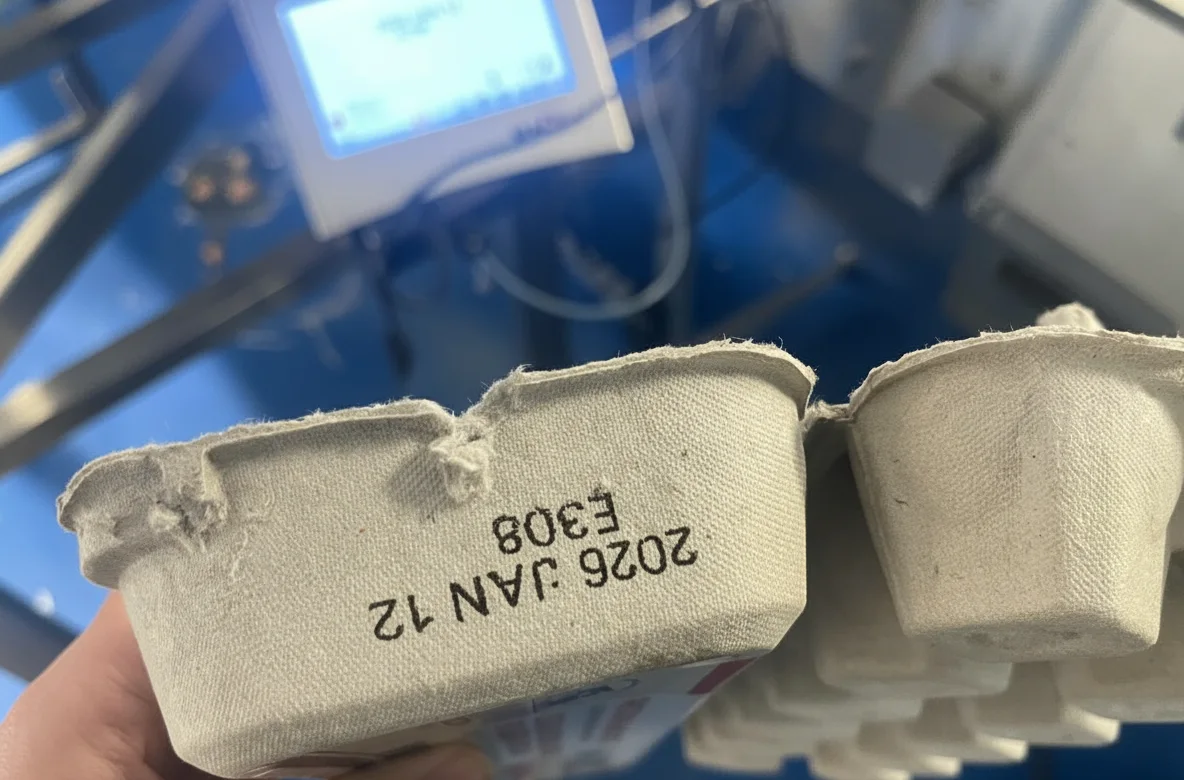
Why More Producers Are Choosing Thermal Inkjet Technology
Thermal Inkjet (TIJ) printing continues to gain popularity across food manufacturing because it combines high resolution printing with low maintenance operation.
Compared with many traditional printing technologies, TIJ systems offer:
- Crisp, high resolution printing
- Simple cartridge replacement
- Minimal maintenance
- Lower operating costs
- Compact installation
- Easy software integration
These advantages make TIJ particularly well suited for modern egg grading and packing facilities.
Frequently Asked Questions
Is it safe to print directly on eggs?Yes. When using approved food grade inks designed specifically for egg marking, direct printing on eggshells is safe and widely used throughout the egg industry.
Can egg printers print logos as well as dates?Yes. Modern thermal inkjet systems can print text, logos, graphics, QR Codes, Data Matrix codes, batch numbers, expiry dates, and other variable information.
How many eggs can the RNJet EP 6H+ print?
The RNJet EP 6H+ can print up to 130,000 eggs per hour, making it suitable for high volume commercial egg production.
What colors are available?
The U.S. catalog lists Dark Pink 100-1567-811 and Blue 100-1568-802. Confirm the supplied formulation and test contrast on the actual shell color.
Get in touch with an expert
Join hundreds of manufacturers using RN Mark industrial inkjet technology to improve coding, marking, and production efficiency.

Proudly Manufactured in Richmond Hill, Ontario
Trusted by manufacturers across North America
Why should you choose RNJet?
One of the key advantages of using our industrial inkjet printer is its versatility in application options. Whether you require side printing or downward marking on various surfaces such as paperboard boxes or plastic packaging materials – this inline printer can handle it all efficiently.
Moreover, reliability and ease-of-use are two crucial factors considered by industries. We assure you that our TIJ coding and marking system meets these requirements effortlessly due to its user-friendly interface and cartridge-based design.
As a Canadian company, RNJet takes pride in delivering high-quality products designed to exceed expectations. Our printers have gained global recognition for durability and precision, making them ideal for modern industrial coding applications.
 HP Licensee
 CE Certified
 CSA Certified
 EPAL Certified