
By Dylan. Originally published by RN MARK on .
Wood pallets are the backbone of global logistics, yet one of their most overlooked aspects is pallet markings. These seemingly simple stamps, codes, and identifiers carry critical information about compliance, safety, treatment methods, and traceability.
On this page
- What Are Pallet Markings?
- Understanding the Most Common Pallet Marks
- 1. IPPC Mark (International Standard)
- 2. Heat Treated Pallet Stamp (HT)
- 3. Methyl Bromide (MB) Marking
- 4. KD (Kiln Dried) Marking
- Pallet Stamp Meanings: A Complete Breakdown
- Types of Pallet Wood and Their Markings
- Traditional vs Modern Pallet Marking
- Benefits of Inkjet Pallet Coding
- Inkjet vs Traditional Stamping
- Best Practices for Pallet Marking
- Frequently Asked Questions
For manufacturers, exporters, and logistics providers, understanding markings on pallets is no longer optional—it’s essential. Whether you’re shipping internationally or managing domestic supply chains, pallet identification systems ensure your goods move safely and legally across borders.
At the same time, the way pallets are marked is evolving. Traditional branding irons and manual stamps are increasingly being replaced by industrial inkjet printing technologies, enabling high-speed, accurate, and compliant pallet coding.
This guide will walk you through everything you need to know – from pallet stamp meanings to modern pallet coding solutions- while helping you understand how to optimize your marking process for efficiency, compliance, and scalability.
What Are Pallet Markings?
Pallet markings refer to any symbols, codes, stamps, or printed identifiers applied to a wooden pallet. These markings provide essential information about:
- Treatment methods (heat treatment, fumigation)
- Country of origin
- Manufacturer or supplier identification
- Compliance with international regulations
- Logistics tracking and traceability
Common forms of pallet marking include:
- Stamped logos or symbols
- Heat treated pallet stamp identifiers
- Shipping mark pallet labels
- Barcodes or QR codes
- Custom pallet identification labels
These markings are often required for international shipping, particularly under ISPM 15 regulations.
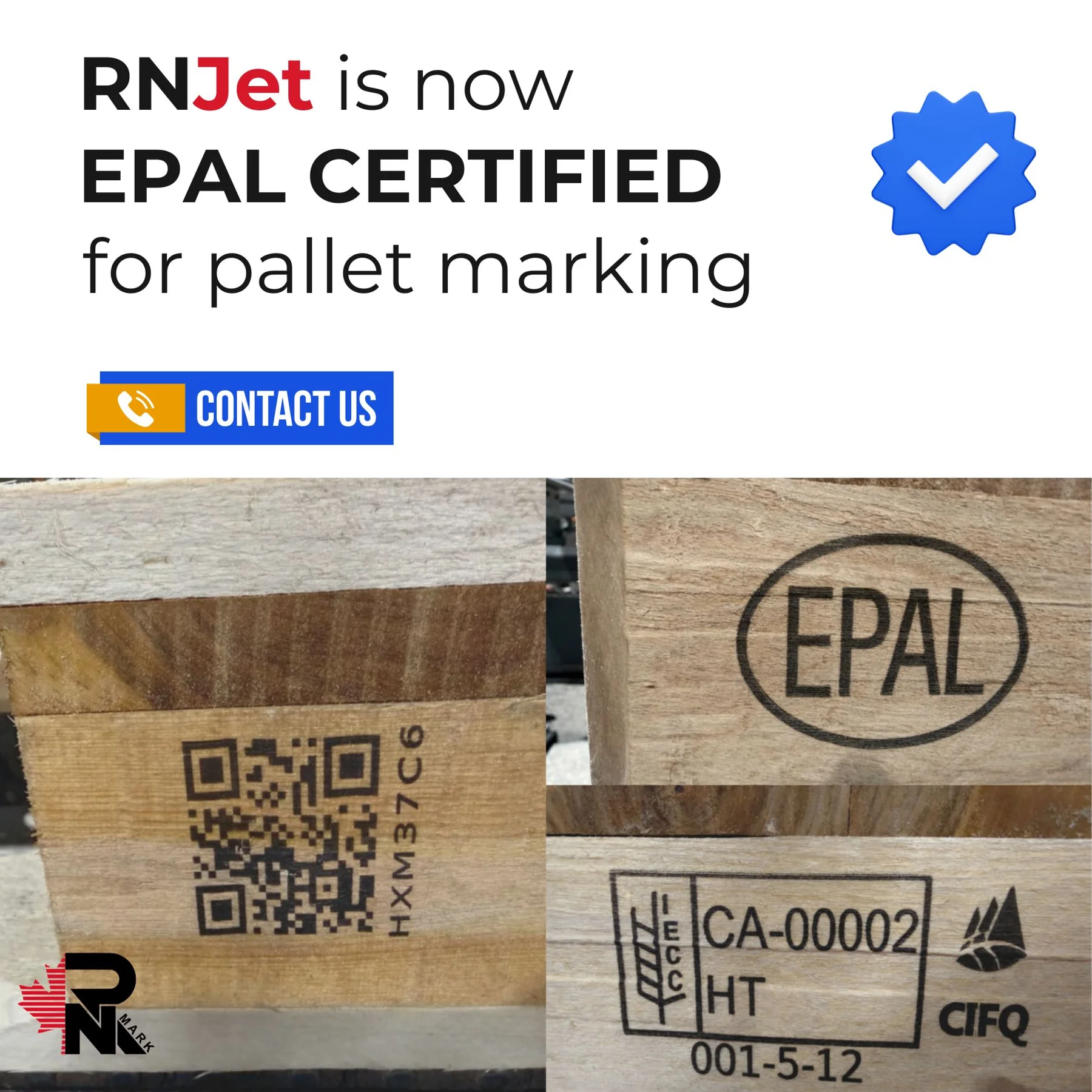 Contact us to get pallet marking solution!
Understanding the Most Common Pallet Marks
1. IPPC Mark (International Standard)
The IPPC pallet mark is the most recognized symbol in global shipping. It certifies compliance with international phytosanitary standards.
A typical IPPC stamp includes:
- IPPC logo (wheat symbol)
- Country code (e.g., US, CA)
- Producer/treatment provider code
- Treatment type (HT, MB)
This ensures wood packaging does not spread pests or diseases across borders.
2. Heat Treated Pallet Stamp (HT)
The heat treated pallet stamp (HT) is one of the most important pallet markings.
- Indicates heating to at least 56°C for 30 minutes
- Required for international shipping
- Eco-friendly compared to chemical treatments
Related keywords: heat treated pallets stamp, heat treated stamp, pallets ht, ht ippc, ippc ht
This is a critical pallet code for compliance.
3. Methyl Bromide (MB) Marking
The MB marking indicates fumigation with methyl bromide.
- Now largely restricted or phased out
- Environmental concerns
- Often searched as mb pallets or methyl bromide pallets
Modern supply chains prefer HT pallets over MB-treated ones.
4. KD (Kiln Dried) Marking
The KD marking indicates kiln drying to reduce moisture content.
- Prevents mold and warping
- Often combined with heat treatment
- Ideal for low-moisture requirements
Pallet Stamp Meanings: A Complete Breakdown
Understanding pallet stamp meanings is critical for compliance and safety.
| Pallet Marking | Meaning |
|---|---|
| IPPC | Indicates compliance with international phytosanitary standards for wood packaging (ISPM 15). |
| HT (Heat Treated) | Pallet has been heat treated to eliminate pests and is approved for international shipping. |
| MB (Methyl Bromide) | Pallet has been fumigated with methyl bromide (less common due to environmental concerns). |
| KD (Kiln Dried) | Wood has been kiln dried to reduce moisture content and prevent mold or warping. |
| DB (Debarked) | Wood has been stripped of bark to comply with international shipping regulations. |
| Country Code | Two-letter code identifying the country where the pallet was produced (e.g., US, CA). |
| Producer Code | Unique registration number assigned to the pallet manufacturer or treatment provider. |
| Treatment Code | Specifies the method used to treat the pallet (e.g., HT, MB). |
Types of Pallet Wood and Their Markings
Softwood Pallets
- Common in North America
- Lightweight and cost-effective
- Often stamped with HT markings
Hardwood Pallets
- Stronger and more durable
- Used for heavy loads
- May include additional identification marks
Recycled Pallets
- Multiple or faded stamps
- Require careful inspection
- Higher compliance risk
Marking clarity is especially important for reused pallets, where older stamps may cause confusion.
Traditional vs Modern Pallet Marking
Traditional Pallet Stamping
- Branding irons
- Rubber stamps
- Manual ink application
Limitations:
- Inconsistent pallet marks
- Low efficiency
- Compliance risks
- Hard to update pallet codes
Industrial Inkjet Printing
- High-speed automated printing
- Consistent, clear markings
- Variable data printing
Applications:
- IPPC pallet marks
- Heat treated pallet stamp
- Shipping mark pallet
- Barcodes & QR codes
Benefits of Inkjet Pallet Coding
High-Speed Printing
Perfect for automated pallet production lines.
Consistent Quality
Clear and legible pallet markings every time.
Variable Data
Print batch numbers, dates, and pallet identification codes.
Compliance Assurance
Meets all pallet marking requirements.
Cost Efficiency
Reduce labor and rework costs.
Scalable Solution
Grows with your production needs.
Inkjet vs Traditional Stamping
| Feature | Traditional Stamping | Inkjet Printing |
|---|---|---|
| Speed | Slow | High-speed |
| Quality | Inconsistent | Consistent |
| Flexibility | Low | High |
| Automation | Limited | Fully automated |
| Data Capability | Static | Variable data |
Best Practices for Pallet Marking
Ensure Mark Visibility
- Clear
- Legible
- Permanently applied
Use Standardized Codes
Maintain consistent pallet codes to avoid confusion.
Automate the Process
Use industrial inkjet systems for speed and accuracy.
Regular Inspection
Ensure markings meet compliance standards.
Frequently Asked Questions
What are pallet markings used for?
They identify treatment, origin, and compliance with international shipping regulations.
What does HT mean on pallets?
It indicates heat treatment to eliminate pests.
Are all pallets heat treated?
No, only pallets used for international shipping must comply with ISPM 15.
What is the difference between pallet stamps and pallet labels?
Stamps are permanent compliance marks, while labels are used for logistics and tracking.