
By Dylan. Originally published by RN MARK on .
Looking for the best portable handheld inkjet printer? In today’s fast-paced industrial landscape, efficiency and accuracy are paramount. That’s why businesses worldwide are turning to handheld inkjet printers for their coding and marking needs. These compact and portable devices offer a range of benefits, from high-quality printing to ease of use and maintenance.
On this page
- Handheld inkjet printer gun - How it works?
- High-Quality Printing
- Portability and Ease of Use
- Versatility in Applications
- Thermal Portable Handheld Printer
- Handheld 3D Printer
- Easy Maintenance and Cost-Effectiveness
- Print and Mark with Handheld Inkjet Printer
- Inkjet or Thermal Technology?
- Inkjet Technology
- Thermal Technology
- Printing Process
- Applications of Handheld Printers
Handheld inkjet printer gun - How it works?
High-Quality Printing
Handheld inkjet printers are renowned for their exceptional printing capabilities. With advanced technology and precise control, these devices can produce sharp and clear codes, labels, and markings on various surfaces. Whether it’s printing on cardboard boxes, plastic containers, or metal surfaces, a handheld inkjet printer ensures legibility and durability.
Portability and Ease of Use
One of the key advantages of handheld inkjet printers is their portability. These compact devices can be easily carried around the production floor or taken to different job sites. Their lightweight design and ergonomic handles make them comfortable to hold for extended periods. Additionally, the intuitive user interface allows for quick setup and operation, minimizing downtime and maximizing productivity.
Versatility in Applications
Handheld inkjet printers offer versatility in coding and marking applications. They can be used as a handheld inkjet printer gun for large-scale projects that require fast and efficient printing. The gun-like design provides stability and control, ensuring accurate placement of codes or labels. Furthermore, these printers can function as handheld label printers, allowing for on-demand labeling of products or packaging.
Thermal Portable Handheld Printer
For industries that require quick-drying and smudge-resistant prints, thermal portable handheld printers are the ideal solution. These printers use thermal inkjet technology to create high-resolution prints that are instantly dry. This feature is particularly beneficial in time-sensitive operations where immediate handling or packaging is required.
Handheld 3D Printer
In addition to traditional coding and marking, handheld inkjet printers can also be used as handheld 3D printers. This innovative application allows for the direct printing of three-dimensional objects, enabling customization and personalization in various industries. From adding logos or serial numbers to creating intricate designs, a handheld inkjet printer opens up new possibilities in product branding and identification.
Easy Maintenance and Cost-Effectiveness
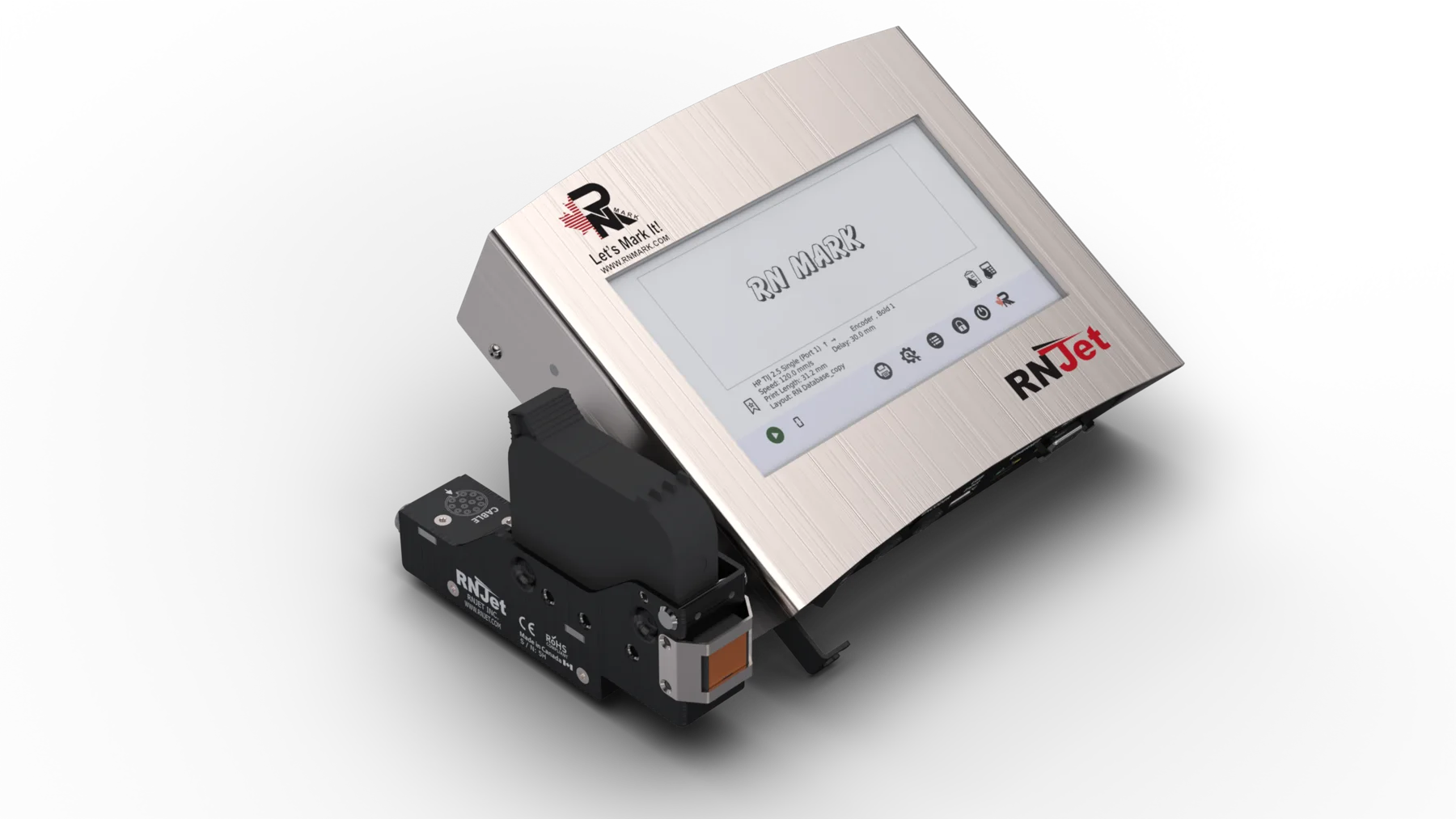
RN Mark’s handheld inkjet printers are designed with ease of maintenance in mind. With user-friendly interfaces and accessible ink cartridge replacements, these devices minimize downtime and ensure continuous operation. Moreover, their cost-effectiveness makes them a smart investment for businesses of all sizes, providing reliable and efficient coding and marking solutions without breaking the bank.
Print and Mark with Handheld Inkjet Printer
- Low Cost Thermal Inkjet Printer
- Easy to use
- High printing speed
- Print high-density codes at high resolution
- Quick drying ink
- Reliable and maintenance-free
- Resists vibrations and temperature fluctuations.
Inkjet or Thermal Technology?
Handheld printers, also known as mobile or portable printers, are compact devices designed for on-the-go printing. These devices are typically battery-powered and connect wirelessly via Bluetooth or Wi-Fi to smartphones, tablets, or computers.
Inkjet Technology
Uses tiny nozzles to spray ink onto surfaces, forming text and graphics with high precision.
Uses CMYK cartridges to produce a wide range of colors and detailed prints.
Thermal Technology
Uses heat-sensitive paper to create marks without ink.
More compact, lightweight, and ideal for fast, clean printing.
Printing Process
1. Data Transfer
Wireless data received from device
2. Rasterization
Data converted into bitmap dots
3. Printing
Ink or heat applied to surface
4. Drying
Ink settles before handling
5. Quality Control
Ensures consistent output
Applications of Handheld Printers
Retail
Receipts, invoices, tickets
Field Service
Work orders and reports
Logistics
Shipping labels and barcodes
Events
Badges, wristbands, tickets
Personal Use
Photos, notes, lists
Watch the original video