
By Dylan. Originally published by RN MARK on .
Crush your print costs, get rid of errors & boost production efficiency with RN Mark printers
What Is Direct Product Marking?
Direct product marking refers to the process of printing essential information—such as expiry dates, barcodes, batch numbers, logos, or QR codes—directly onto the surface of a product or its packaging, instead of applying a separate adhesive label.- Food & beverage
- Pharmaceuticals
- Cosmetics
- Electronics
- Automotive
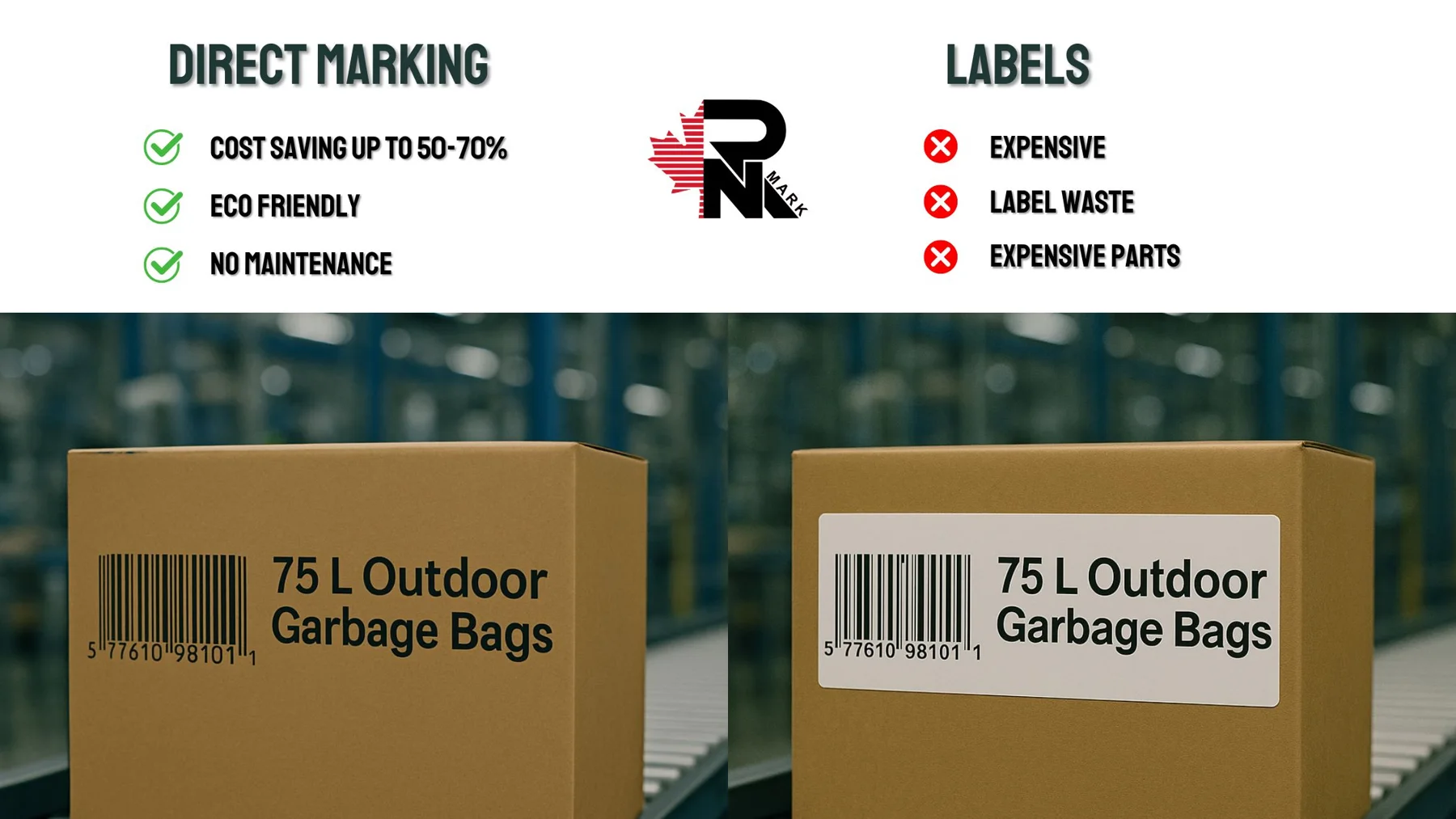
Labels vs. Direct Printing: The Real Cost Breakdown
1. Label Material Costs Add Up
Labels aren’t cheap. Each label used per product involves:
- Paper or film material
- Adhesive backing
- Ink (if pre-printed)
- Liner waste (which must be discarded)
- Shipping, storage, and handling
For companies labeling thousands—or millions—of items per year, labeling costs can run into tens of thousands of dollars annually.
Direct printing with TIJ? You eliminate those material costs completely. You’re printing directly onto the product or package—no label stock required.
2. No Label Printers or Applicators Needed
Traditional labeling systems require:
- Label printers
- Label applicators
- Rewinders
- Sensors
- Ongoing maintenance
Not only are these systems expensive to purchase and maintain, but they also take up valuable production space and increase the risk of line downtime due to mechanical issues.
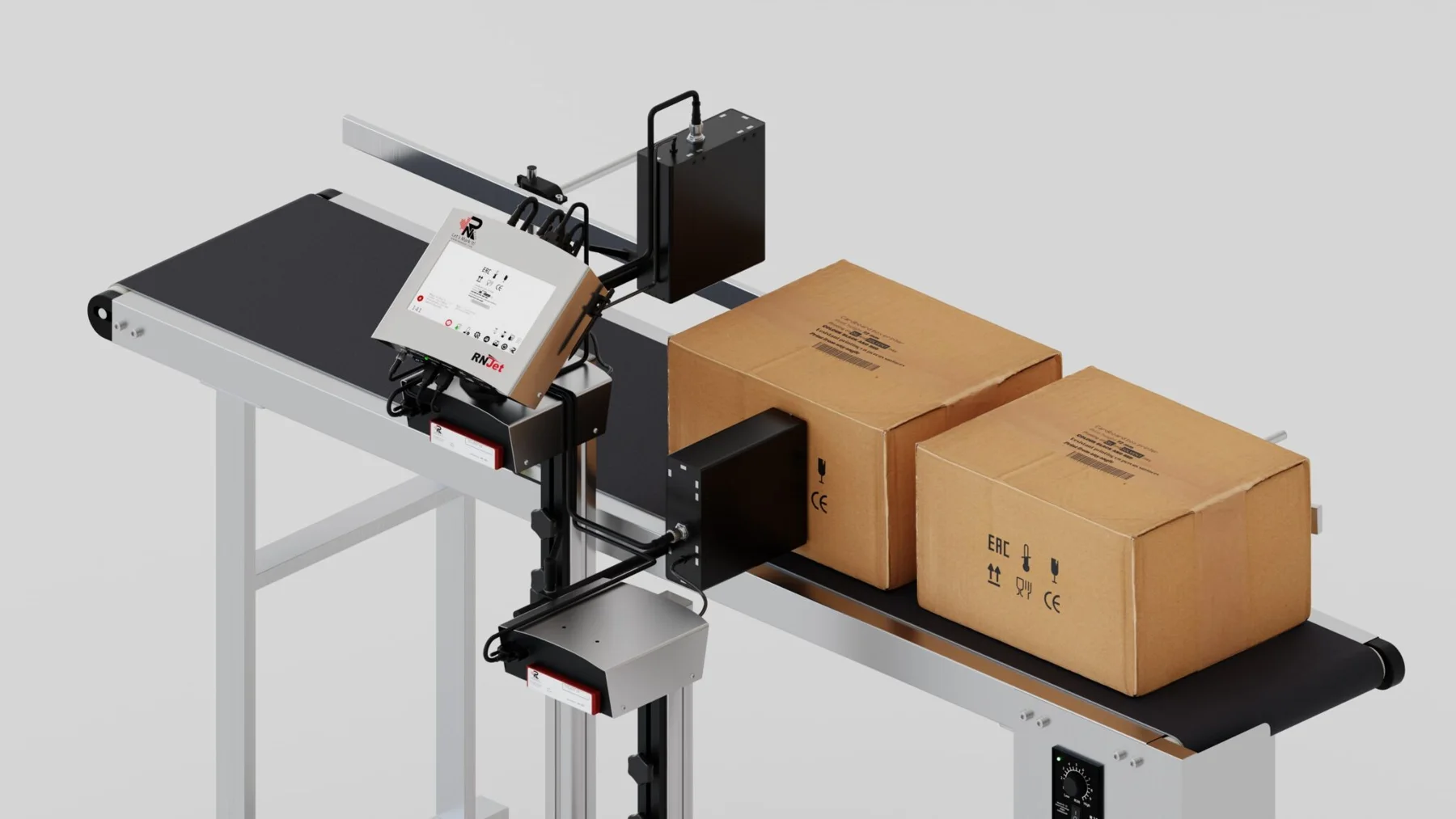
TIJ systems, in contrast, are:
- Compact and easy to install inline
- Low-maintenance (no moving parts)
- Quick to set up and reposition for different products
With fewer machines and fewer parts, your capital investment and maintenance costs drop significantly.
3. Reduced Labor and Downtime
Labeling lines often require manual intervention—loading rolls, clearing jams, calibrating sensors. This adds labor costs and increases the chances of production slowdowns.
TIJ printing allows for hands-free, inline integration:
-
No rolls to load
-
No sensors to align
-
Minimal operator intervention
This means fewer bottlenecks and more uptime, translating to increased productivity and further labor savings.
4. No Waste from Liner or Misapplied Labels
Labels typically include a liner that ends up as landfill waste. Misapplied or skewed labels often lead to product rework or rejection, increasing both material and labor costs.
TIJ direct marking produces no liner waste and has virtually no misapplication risk, because the print is placed precisely with every pass.
If you’re still relying on adhesive labels for product or packaging identification, it’s time to re-evaluate.
TIJ direct printing is faster, cleaner, more flexible—and significantly more cost-effective. You’ll reduce operational complexity, eliminate waste, and boost sustainability efforts—all while improving your bottom line.
Make the switch today and discover how RNJet industrial printers can help you go label-free for less.